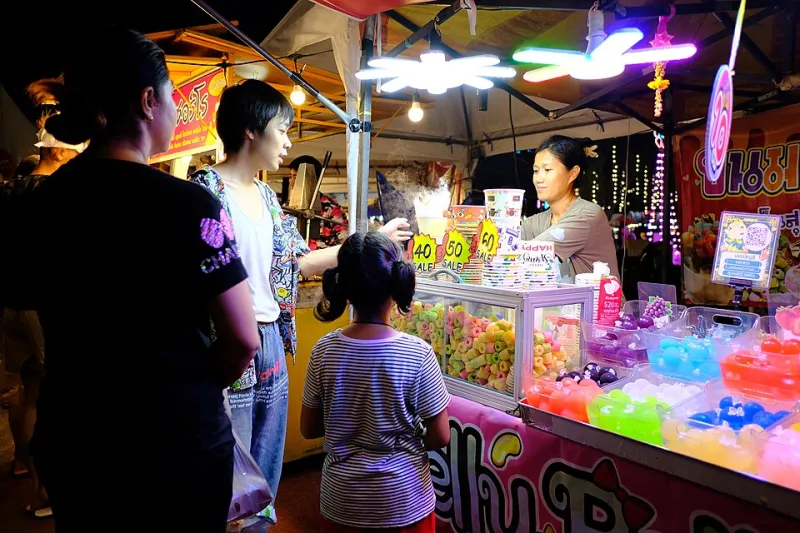
Wrapped in Banana Leaves and Centuries of Tradition: The Beautiful Journey of Thailand's Most Beloved Desserts
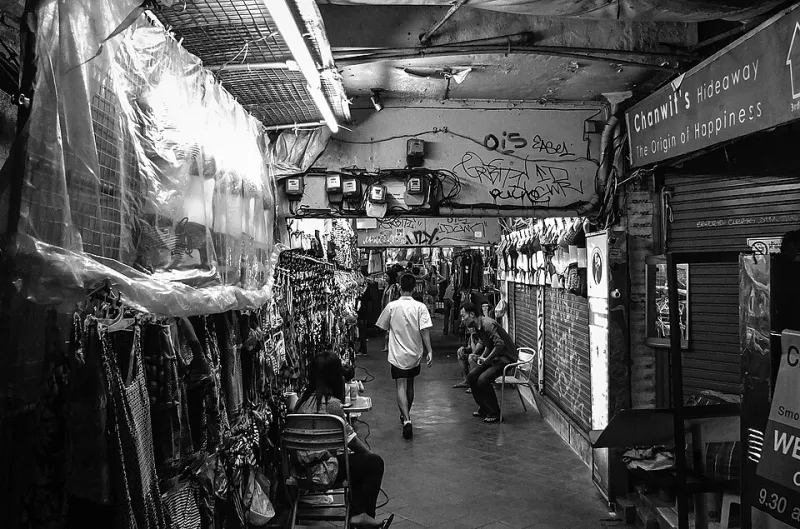
Photo: Pedro Figueiredo, CC BY-SA 3.0, via Wikimedia Commons
Imagine it's early morning in Bangkok. The sky is still pale, the air already thick with humidity, and along the edges of Chatuchak Market, vendors are arranging their wares before the crowds arrive. One woman, probably in her sixties, is pressing coconut-infused rice into small molds with the kind of practiced efficiency that only comes from doing something thousands of times. She's been at this since 4 a.m. By 8, she'll have sold out.
That scene — unhurried, skilled, deeply rooted in place — is where Thailand's dessert tradition actually lives. Not in a factory. Not on a menu. In the hands of someone who learned from their mother, who learned from theirs.
Now that same tradition is making its way across the Pacific, landing on American doorsteps in vacuum-sealed packages and premium gift boxes, finding fans who've never set foot in Bangkok but who feel, somehow, like they're tasting something real. That journey — from banana-leaf-wrapped street snack to lifestyle product — is one of the more fascinating food stories of the last decade.
The Roots Run Deep
Thai dessert culture, known broadly as khanom, stretches back centuries, shaped by royal court cuisine, Buddhist temple offerings, and the practicalities of tropical cooking. Many of Thailand's most iconic sweets were originally prepared as merit offerings — foods made with care and given freely as acts of spiritual generosity. That origin story gives Thai desserts a kind of intentionality that you don't often find in confectionery traditions elsewhere.
The Portuguese had an unexpected influence on Thai sweets during the Ayutthaya period, introducing egg-yolk-based desserts that became thoroughly Thaified over the centuries. Thong Yip (pinched gold cups) and Foi Thong (golden egg threads) are direct descendants of this cross-cultural exchange, still made today using techniques that haven't changed dramatically in hundreds of years. They're delicate, labor-intensive, and absolutely gorgeous — the kind of thing that makes you slow down and actually look at your food before eating it.
Coconut, palm sugar, rice flour, and pandan leaf form the backbone of most traditional Thai sweets. These aren't exotic novelties — they're pantry staples that have sustained a dessert tradition across generations, lending their flavors to everything from sticky rice parcels to jellied confections in colors that seem almost too vivid to be natural (they are natural, by the way — pandan gives that electric green; butterfly pea flower produces a stunning purple-blue).
Street Vendors as Custodians of Culture
It's hard to overstate how central street food is to Thai culinary identity, and desserts are no exception. Bangkok's floating markets, the night bazaars of Chiang Mai, the beachside stalls of Hua Hin — each region has its own sweet specialties, its own vendor families who've been perfecting their recipes for generations.
Khao Niao Mamuang — mango sticky rice — might be the most internationally recognized of these. Ripe mango, glutinous rice cooked in sweetened coconut milk, a drizzle of slightly salty coconut cream on top. It sounds simple. It is simple. And yet it's one of those dishes that's almost impossible to replicate perfectly outside of its native context, because so much depends on the specific sweetness of Thai mangoes, the texture of the rice, the ratio of salt to sugar in the cream. Street vendors who've been making it for twenty years understand those ratios intuitively. They don't measure. They know.
Kanom Krok — small coconut-rice pancakes cooked in dimpled cast-iron pans — is another street staple that's earned devoted fans among Western visitors. The outside crisps up while the inside stays custardy and soft, with a subtle sweetness and a richness from coconut milk that's genuinely addictive. Watching a vendor work a full pan of these is its own kind of performance art.
Then there's Luk Chup, the art candy of Thai desserts. These are mung bean paste sweets hand-shaped and painted to look like miniature fruits and vegetables — tiny strawberries, perfect little eggplants, itty-bitty corn cobs, all glazed to a glossy finish. They taste lovely, but honestly, they're almost too beautiful to eat. Almost.
The Instagram Era and the Premiumization of Thai Sweets
Something interesting happened when social media became a dominant force in food culture: visually stunning foods got a massive commercial boost, and Thai desserts — which have always been extraordinarily photogenic — were perfectly positioned to benefit.
Butterfly pea flower lemonade that shifts from blue to purple when you add citrus. Mango sticky rice plated with architectural precision. Luk Chup arranged like a still-life painting. These aren't foods that needed to be made more beautiful for the camera — they already were beautiful. The camera just finally caught up.
This visibility created appetite (literally and figuratively) among American food enthusiasts who suddenly wanted access to these treats beyond the occasional Thai restaurant visit. Enterprising Thai food entrepreneurs took notice. A new wave of premium Thai confectionery brands began emerging, some based in Thailand with serious e-commerce ambitions, others founded by Thai-Americans who wanted to share their food heritage with a broader audience.
The pitch wasn't just "try something new." It was "experience something with a story." And that reframing — from ethnic novelty to artisan cultural product — turned out to be exactly right for a US market that was increasingly interested in the provenance of its food.
Bringing It Home: The E-Commerce Revolution
Shipping delicate, often perishable sweets across an ocean is not a trivial logistical challenge. Early attempts at importing Thai desserts to the US were often hampered by shelf-life issues, inconsistent quality, and the simple difficulty of maintaining the integrity of foods that were never designed to travel far from their point of production.
But technology, better packaging, and a new generation of food-focused logistics companies have changed the equation considerably. Freeze-drying techniques preserve flavors without sacrificing too much texture. Vacuum sealing extends shelf life while maintaining quality. And direct-to-consumer platforms have made it possible for small Thai producers to reach American customers without needing a traditional distribution deal.
Platforms like Candy Burst TH have emerged as curators in this space — doing the sourcing work, vetting quality, and presenting Thai sweets in a context that helps American consumers understand what they're getting and why it's worth caring about. It's the difference between finding a random bag of tamarind candy at an import shop and receiving a thoughtfully selected assortment with context about what you're eating and where it came from.
Why It Matters
Food is one of the most direct pathways to cultural understanding, and Thai desserts carry an enormous amount of cultural information — about geography, history, values, and the particular Thai genius for finding beauty in everyday things. When an American in Ohio bites into a piece of Foi Thong or tears open a bag of pandan-flavored coconut candy, they're connecting with something that stretches back centuries and across an ocean.
That's not a small thing. And it's why the story of Thai sweets finding their way to American tables feels like more than just a snack trend. It feels like something worth celebrating — and definitely worth tasting.