Crunch, Chew, Melt: How Thai Candy's Texture Obsession Is Making American Sweets Feel Boring
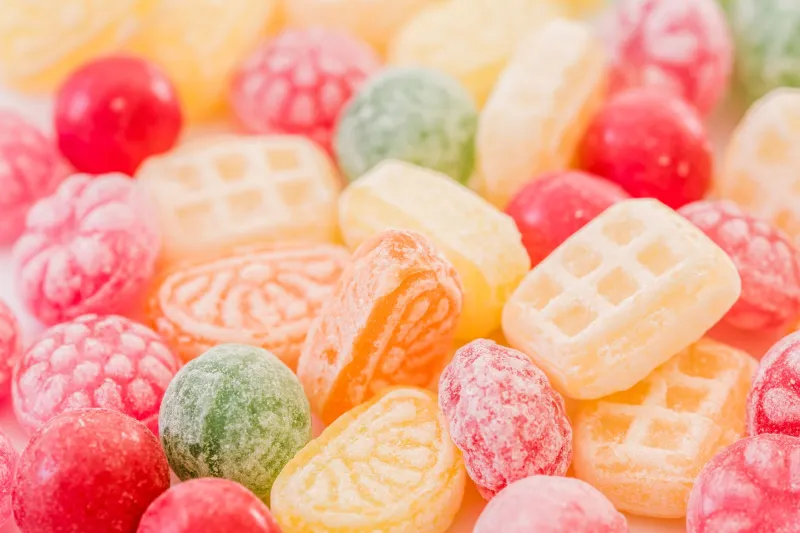
Pop a standard American gummy bear in your mouth. It's chewy. That's kind of it. Now crack open a piece of Thai mango candy coated in a thin sugar shell dusted with chili salt — the shell shatters, the chew kicks in, a slow heat blooms at the back of your throat, and then a cool, fruity finish lingers. Same category, completely different universe.
This isn't a fluke. Thai confectionery has spent centuries engineering what food scientists call "multi-phase texture" — the experience of moving through distinct physical sensations in a single bite. And right now, American candy lovers are waking up to the fact that their go-to sweets have been serving them one note when a whole symphony was available.
What "Texture" Actually Means in Thai Candy Culture
In Thailand, the concept of texture in food isn't an afterthought — it's a design principle. Thai culinary tradition places enormous value on khwam krop (crispiness) and khwam niam (chewiness) as essential flavor partners, not just pleasant side effects. This philosophy flows directly into Thai confectionery, where a candy that delivers only one texture is considered, well, unfinished.
Take kanom ping, a traditional Thai baked confection with a crisp, almost papery exterior that gives way to a dense, slightly sticky almond-paste interior. Or consider tamarind candies that start as firm, slightly grainy chews and gradually soften into a sticky, jammy finish. Even Thai hard candies are frequently layered — a brittle outer shell giving way to a softer, flavored core that behaves completely differently in your mouth.
"We think about texture the way a composer thinks about rhythm," says Nattaya Srisuk, a Bangkok-based confectioner whose family has been making traditional Thai sweets for three generations. "You need contrast. You need surprise. If every moment feels the same, the candy becomes background noise."
The Science of Why Contrast Keeps You Coming Back
Food texture researchers have a term for what Thai candy is doing so well: textural contrast reinforcement. Basically, when your brain encounters an unexpected shift in physical sensation — say, a crisp shell suddenly giving way to something soft — it registers the moment as a small, pleasurable surprise. That micro-moment of novelty triggers a dopamine response, which is part of why you reach back into the bag before you've even finished chewing.
Dr. Marcus Webb, a food scientist who consults for snack brands across North America, puts it plainly: "American candy largely optimized for consistency. You know exactly what a Starburst is going to feel like before it hits your tongue. That predictability was a selling point for decades. But consumer palates are evolving. People are actively seeking out textural complexity now — the same way craft beer drinkers started chasing layered flavor profiles."
The data backs him up. Market research from the past three years shows a sharp uptick in US snack consumers specifically searching for terms like "crunchy and chewy," "layered texture candy," and "satisfying crunch snacks." Thai candy, with its built-in textural architecture, is landing right in the middle of that demand spike.
The Techniques Behind the Magic
So how do Thai confectioners actually pull this off? A few key methods stand out.
Sugar panning is one of the oldest tricks in the book, but Thai candy makers use it with unusual precision. By building up thin, sequential layers of sugar syrup around a chewy or soft center — sometimes dozens of layers — they create shells with a very specific brittleness. The goal isn't just crunch for crunch's sake; it's a crunch calibrated to break cleanly and quickly so the contrasting interior registers immediately.
Rice flour and glutinous rice are workhorses in Thai confectionery texture. Unlike wheat-based doughs, glutinous rice creates a chew that's simultaneously springy and smooth — it has what bakers call "pull" without the toughness. This is the backbone of many Thai mochi-adjacent sweets, and it's a texture that Western candy makers rarely replicate because the ingredient isn't part of their traditional pantry.
Toasted coconut and sesame coatings add a dry, nutty crunch to the outside of otherwise soft candies, creating a contrast that's less dramatic than a hard shell but more complex — because the coating itself has varying degrees of crispness depending on how evenly it's toasted.
Freeze-dried fruit inclusions — increasingly common in modern Thai candy formats — deliver an almost violent crunch that dissolves almost instantly into intense fruit flavor. It's a two-second textural journey compressed into a single bite.
Why American Candy Got Stuck in a Rut
This isn't a knock on American candy makers — they've been incredibly good at what they do. But the US confectionery industry largely built its golden era around mass production consistency. Texture complexity is hard to scale. A candy that's supposed to have a crispy shell and a chewy center requires careful humidity control, precise timing, and often shorter shelf-stable windows. For a factory producing millions of units a week, those variables are expensive problems.
Thai candy — especially the artisan and small-batch varieties that have been making waves in the US market — doesn't always have to solve for that scale. The makers can afford to prioritize the sensory experience over logistics, and it shows in every bite.
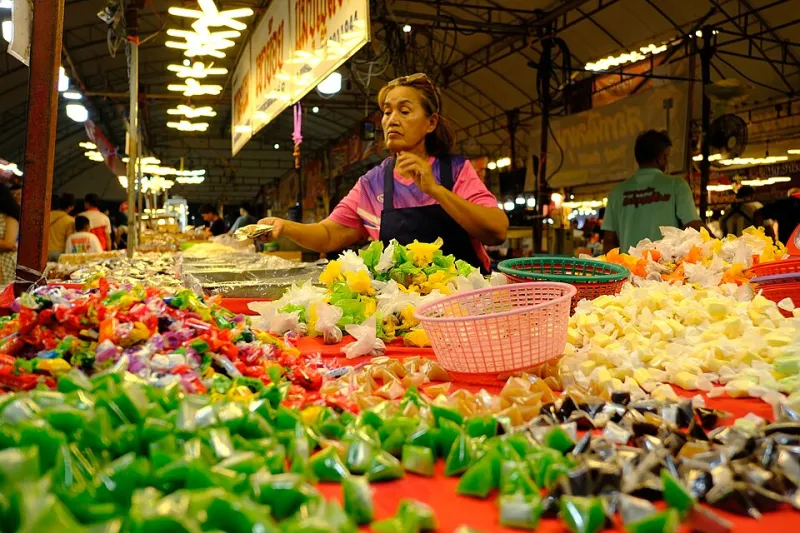
There's also a cultural dimension. American candy was, for a long time, marketed primarily to children. Simplicity was a feature. Thai sweets have always been made for adults as much as kids — they're served at festivals, given as gifts, and eaten as a genuine pleasure rather than just a sugar hit. That adult orientation pushed Thai confectioners to keep the experience interesting.
The Texture Moment Is Now
American consumers have been on a flavor adventure for the past decade — chasing heat, sourness, umami, and global profiles they'd never encountered before. Texture is the next frontier, and Thai candy is already there waiting.
Snack brands across the US are scrambling to add "crunch elements" and "textural contrast" to their product lines, but the authenticity gap is real. There's a difference between a candy that was engineered with texture complexity from the ground up and one that had a crispy coating added in a reformulation meeting.
For anyone who hasn't yet experienced what a properly made Thai candy can do in your mouth — the shatter, the chew, the slow finish — consider this your invitation. Your taste buds have been living on a two-dimensional plane. It's time to go three-dimensional.
At Candy Burst TH, we've been saying it since day one: Thai candy doesn't just taste different. It feels different. And once you know the difference, there's really no going back.