Sugar, Hustle, and a Phone Camera: Meet the Thai Candy Makers Turning Family Recipes into Global Brands
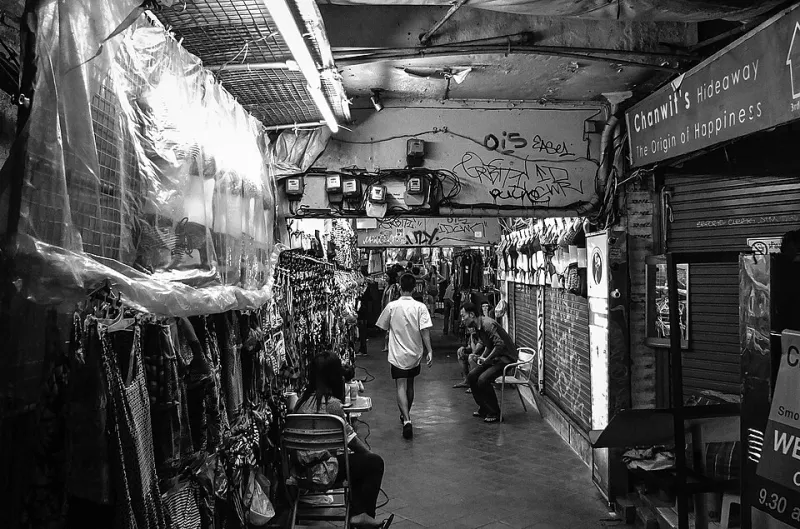
Photo: Pedro Figueiredo, CC BY-SA 3.0, via Wikimedia Commons
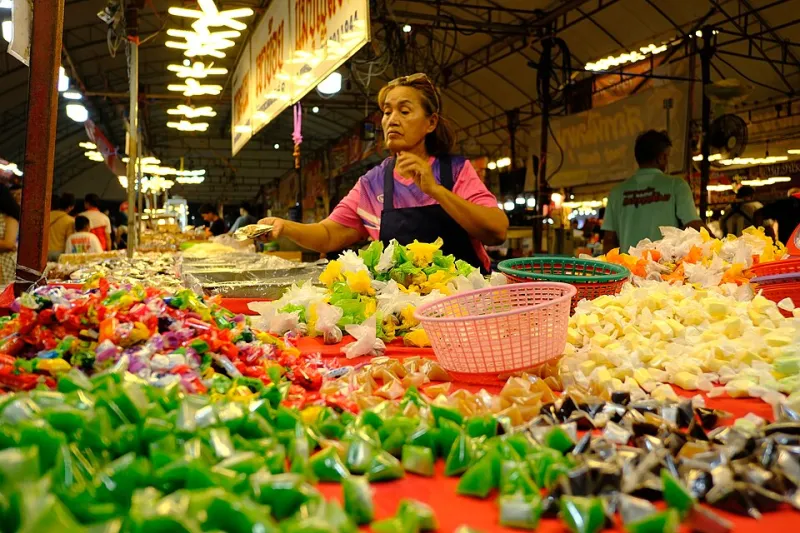
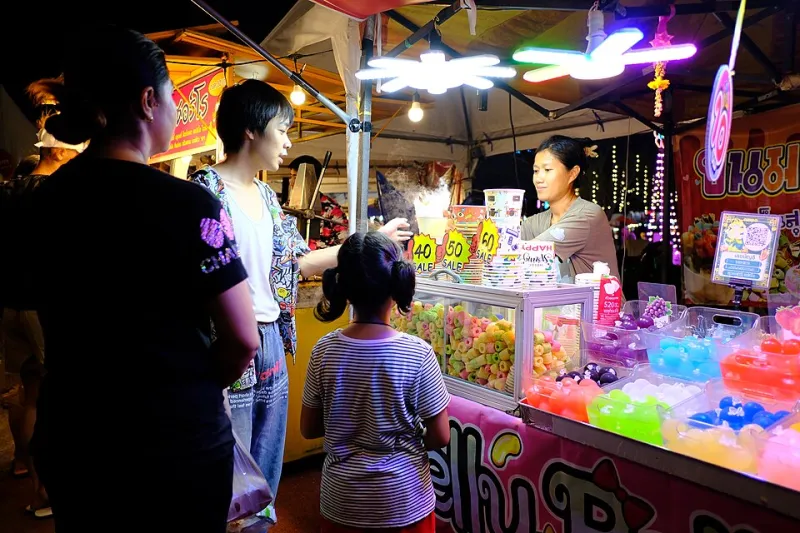
There's a particular kind of magic that happens at a Thai street market after dark. Smoke from grilling skewers curls into the humid air, neon signs flicker above rows of plastic stools, and somewhere near the end of a busy soi, a vendor ladles warm coconut milk over a tray of pandan-scented sweets. It's a scene most Americans have only glimpsed through travel vlogs or a friend's Instagram story. But increasingly, the people behind those carts are the same ones packing orders for customers in Chicago, Austin, and Portland.
This is the new reality of Thai candy: a cottage industry gone global, powered by smartphones, social platforms, and a generation of makers who refuse to let geography limit who gets to taste what they've spent their whole lives perfecting.
The Cart Before the Click
For Nattaporn Chaiyasit, the journey started the way most great food stories do — in a grandmother's kitchen. Growing up in Chiang Mai, she watched her grandmother prepare khanom tom, the soft, coconut-coated rice balls stuffed with palm sugar filling that show up at every Thai temple fair worth attending. By the time Nattaporn was a teenager, she was helping sell them from a folding table outside her family's home. By her mid-twenties, she was doing the same thing — but shipping them to zip codes she had to Google.
"I didn't know anything about export rules or customs forms," she admits, laughing. "I just knew people kept asking me in the comments where they could buy them. So I figured it out."
That figuring-it-out process is something nearly every Thai candy founder we spoke with described in almost identical terms. There was no playbook, no accelerator program, no business school case study to follow. There was a product people loved, a comment section full of hungry strangers, and the sheer stubbornness to make it work.
Going Viral Before You Go Global
If you spend any time in the corners of TikTok devoted to international snacks, you've probably seen the format: someone tears open a colorful package, bites into something unfamiliar, and their face does something involuntary. Eyes wide. Eyebrows up. A slow nod that says okay, I did not expect that.
For Somchai Rattanakul, a candy maker from Bangkok's Chatuchak district known for his intensely sour tamarind ribbons dusted in chili and dried plum powder, that moment came when a food influencer with about 400,000 followers tried his product on camera and basically lost her mind in the best way possible. The video hit two million views in a week. His DMs became unmanageable. His website, which he'd built himself on a free e-commerce platform, crashed twice.
"That week was the most stressful and most exciting of my life," he says. "I had to call my cousin, my cousin's wife, and my neighbor to help me pack boxes. We worked until 3 a.m. every night."
Somchai's story isn't unique — it's practically a blueprint. Thai candy makers, many of whom have been perfecting recipes for decades, are finding that the American appetite for bold, unexpected flavor combinations is almost perfectly matched to what they've been making all along. Sour-sweet-salty-spicy isn't a novelty in Thailand; it's just Tuesday. But for a US snack market that spent years obsessing over sea salt caramel as the height of flavor complexity, Thai candy lands like a revelation.
Staying Rooted While Reaching Out
What makes these founders genuinely compelling — beyond the business hustle — is how intentional most of them are about not losing the thread back to their origins. Scaling up doesn't have to mean selling out, and a lot of these makers are proving that point in real time.
Pailin Wongkham runs a small operation in Nakhon Pathom, a province just west of Bangkok famous for its sweet pomelo and its long tradition of khanom (Thai sweets) production. Her specialty is foi thong, the delicate golden egg-yolk threads that get pulled into shimmering nests and served at celebrations. The technique, originally brought to Thailand from Portugal centuries ago, requires patience, precision, and a very steady hand.
"My mother always said this candy is made with intention," Pailin explains. "Every piece takes time. You cannot rush it. I think American customers feel that when they receive it — they know someone cared."
She sells through her own website and a handful of specialty Thai grocery delivery platforms that have popped up to serve diaspora communities across the US. She's careful about what she agrees to. A few larger distributors have approached her about scaling production, but she's turned them down — at least for now.
"If I make ten thousand pieces a day with machines, it's not the same thing anymore. I'm not ready to do that. Maybe someday, but not yet."
The Infrastructure Nobody Talks About
Here's the part of the story that doesn't get enough attention: the sheer logistical complexity of getting a handmade Thai sweet from a home kitchen in Lampang to a front porch in New Jersey without it turning into a sugary disaster.
Temperature sensitivity, customs documentation, shelf-life requirements, FDA labeling rules — these aren't small hurdles. And yet, a growing ecosystem of shipping partners, international fulfillment services, and Thai-American entrepreneur networks has quietly built the infrastructure to make it possible. Facebook groups connecting Thai food sellers with US-based logistics consultants. Discord servers where candy makers swap tips on vacuum sealing and moisture control. WhatsApp threads that function as informal trade associations.
Somchai credits much of his survival through those first chaotic viral weeks to a network of other small Thai food exporters who'd been through it before him. "They told me which courier was reliable, which packaging held up in heat, what to write on the customs form. Without them, I would have given up."
What American Customers Are Actually Buying
It's tempting to frame this whole story as purely about business — disruption, direct-to-consumer models, social commerce. And sure, those things are real and genuinely interesting. But spend five minutes reading the customer reviews on any of these small Thai candy brands' websites and a different picture emerges.
People write about their Thai coworker who brought in a bag of something years ago and they never forgot the taste. About a trip to Bangkok that ended too soon. About a mom who grew up eating these sweets and wants her American-born kids to know where they came from. About the simple, slightly overwhelming joy of biting into something and being transported somewhere completely new.
That's what Nattaporn, Somchai, Pailin, and dozens of makers like them are really shipping across the Pacific. Not just candy — though the candy is genuinely excellent. They're exporting memory, identity, and the particular kind of sweetness that only exists when something is made by hand, with care, by someone who learned how from someone they loved.
And honestly? That's worth every customs form.