Seven Thai Candy Flavors With Stories as Rich as Their Taste
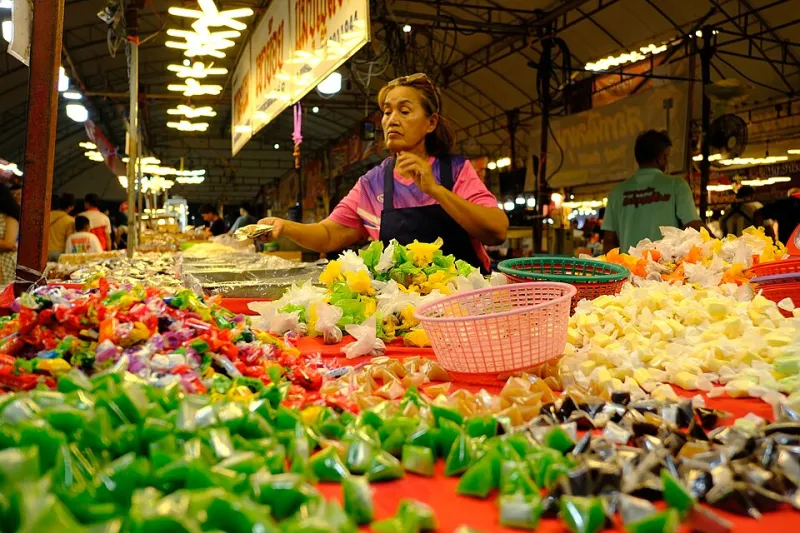
Photo: PattayaPatrol, CC BY-SA 4.0, via Wikimedia Commons
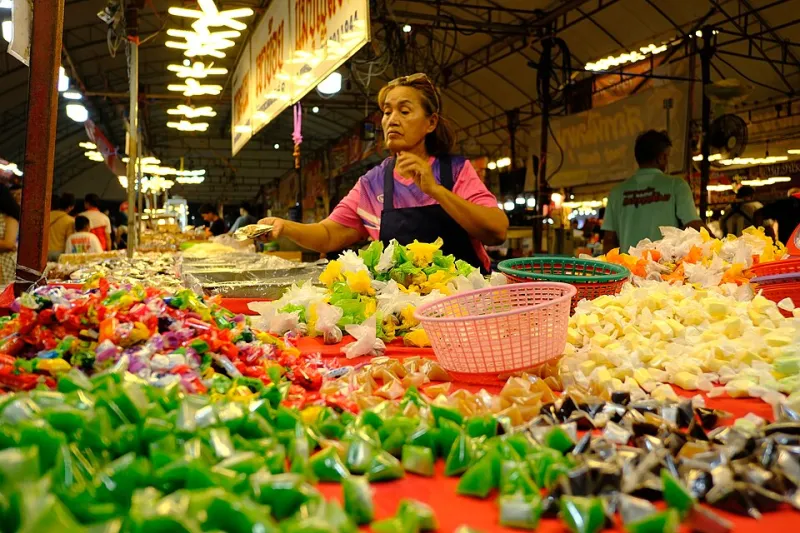
Picture a Bangkok street stall at dusk. Smoke curls off a charcoal grill, a vendor fans herself with a folded newspaper, and somewhere in the middle of that beautiful chaos sits a basket of candies wrapped in wax paper and bright foil. Most American shoppers first meet Thai confectionery through an unboxing video or an airport gift shop. But behind every flavor is a story that goes way deeper than the wrapper.
We talked to candy artisans, home confectioners, and a couple of self-described "flavor archaeologists" who spend their days tracing Thai ingredients back through generations of cooking. Here's what they told us about seven iconic flavors — and why each one hits different.
1. Coconut: The Flavor That Built Thai Dessert Culture
If Thai candy had a founding father, it would be coconut. Mae Noi Srisuk, a third-generation candy maker from Samut Songkhram, says coconut milk was the original base for almost every traditional Thai sweet. "Before sugar was refined and widely available, fresh coconut cream was how you made something taste rich and indulgent," she explains.
Coconut candy in Thailand isn't just sweet — it's layered. Toasted coconut flakes bring nuttiness, fresh cream adds a milky softness, and when paired with a pinch of salt (more on that later), the whole thing becomes almost savory. American consumers raised on Mounds bars or Almond Joy might think they know coconut candy, but Thai coconut confections lean creamier and less sugary, with a depth that keeps you chewing and thinking.
2. Tamarind: Sweet, Sour, and Thoroughly Misunderstood
Tamarind gets a bad rap from people who've only encountered it as a condiment. In Thai candy form, it's a revelation. The tamarind fruit — which grows in pods on tall trees throughout Central and Southern Thailand — has a naturally tart pulp that candy makers have been working with for centuries.
Flavor historian Dr. Pattama Kanchanawat, who lectures at Chulalongkorn University, describes tamarind candy as "the first Thai flavor that truly challenged Western palates in a good way." When coated in sugar and chili powder, tamarind becomes something genuinely complex: tart up front, sweet in the middle, and warm at the finish. It's the flavor equivalent of a plot twist. American snackers who grew up on Warheads or Sour Patch Kids tend to get it immediately.
3. Lemongrass: The Herb That Crossed Over
Lemongrass is everywhere in Thai cooking — in curries, soups, and herbal teas — but its journey into candy form is a relatively recent one. Artisan candy maker Khun Thitiporn from Chiang Mai started experimenting with lemongrass-infused sugar syrups about fifteen years ago after noticing how much Americans loved the scent of it in Thai restaurants.
"The aroma is the first hook," Thitiporn says. "People smell lemongrass and they already feel good." In candy form, lemongrass delivers a bright, citrusy top note that fades into something almost floral. It's lighter than you'd expect and incredibly refreshing. These candies have found a particularly enthusiastic audience among health-conscious American consumers who appreciate that lemongrass has a long history as a digestive aid in Thai traditional medicine.
4. Pandan: The Green That Means Something
If you've ever bitten into a Thai candy that's an almost unnatural shade of green and tasted like vanilla crossed with fresh grass, you've had pandan. The pandan leaf — sometimes called the "vanilla of Southeast Asia" — is one of the most beloved flavoring agents in Thai and broader Southeast Asian cooking.
Pandan candy tends to surprise American first-timers because the color signals something artificial, but the flavor is deeply natural and almost nostalgic. "People tell me it reminds them of something they can't quite name," says Mae Noi. "That's because pandan is comforting in a way that's hard to explain. It's warm and sweet but also a little green and alive."
The leaf's extract is used to flavor sticky rice, coconut custards, and layered jellies across Thailand. In candy form, that same warmth and herbal sweetness comes through in a concentrated, chewable package.
5. Chili: Heat as a Feature, Not a Bug
Here's where things get interesting for American candy lovers. The idea of chili in candy isn't foreign — Mexican candy culture has made chili-dusted treats mainstream in the US. But Thai chili candy operates differently. Thai chilis tend to be fruitier and more aromatic than the straightforward heat of cayenne, and candy makers use that distinction deliberately.
Khun Thitiporn explains that in Northern Thailand, chili was historically used in small amounts not just for heat but for its ability to amplify other flavors. "A little chili makes tamarind taste more tart, makes mango taste sweeter, makes coconut taste richer," he says. "It's not there to punish you. It's there to wake everything else up."
That philosophy shows up clearly in Thai chili candies, where the heat builds slowly and lingers just long enough to make you want another piece.
6. Mango: The One Americans Think They Know
Mango candy is everywhere — from grocery store checkout lines to airport kiosks. But Thai mango candy, particularly when made with unripe green mango, is a completely different animal from the sweet, tropical versions most Americans are familiar with.
Green mango is tart and crunchy, and in Thai cuisine it's treated almost like a vegetable. When you candy it or use it as a flavoring, you get something with real backbone — a sourness that lingers, a freshness that cuts through sweetness. Dr. Kanchanawat points out that green mango candy was originally a way to preserve the fruit during harvest season. "It was practical before it was popular," she says. The flavor has since become iconic, especially among younger Thai candy fans in the US who are specifically seeking out that tart, less-sweet profile.
7. Salted Egg: The Wildcard That Won Everyone Over
Salted egg candy sounds like it belongs on a dare menu, but hear us out. Salted duck egg yolks have been a cornerstone of Thai and broader Asian cooking for generations, prized for their rich, almost buttery, intensely savory flavor. Thai candy makers started incorporating salted egg into caramels and milk candies and the result is something that genuinely doesn't exist in the American confectionery tradition.
It's umami in candy form — and once you try it, regular caramel starts to feel one-dimensional. "The salt isn't just salt," Mae Noi explains. "It's a whole layer of richness that you feel in your chest." Salted egg candy has become one of the most talked-about Thai flavors among American food influencers, precisely because it's so hard to describe until you've actually tasted it.
The Bigger Picture
What ties all seven of these flavors together is intention. Thai candy makers — whether they're working out of a century-old family kitchen or a modern production facility — are pulling from a deep well of culinary tradition. These aren't flavors invented in a lab to maximize snackability. They're flavors that evolved alongside Thai culture, shaped by what grew in the soil, what was available at the market, and what made people feel good.
For American consumers, that backstory is part of the appeal. In a snack landscape crowded with artificial everything, there's something genuinely exciting about a candy that can tell you exactly where it came from — and take you there, one chew at a time.