Shelf Space Dreams: How Thai Candy Brands Are Landing Spots in America's Biggest Grocery Stores
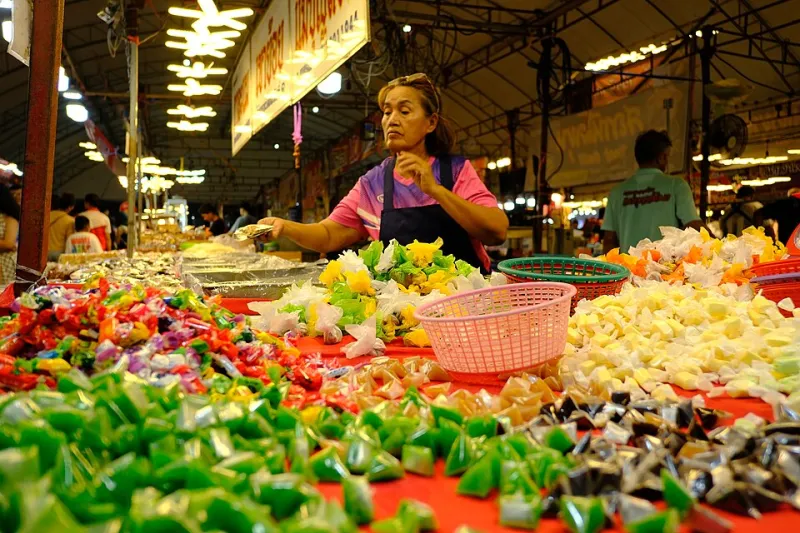
Photo: PattayaPatrol, CC BY-SA 4.0, via Wikimedia Commons
Not that long ago, scoring your favorite Thai candy meant a dedicated trip to an Asian grocery store, a lucky find at an import shop, or a very patient wait for an online order to arrive. But walk through the snack aisle of a Whole Foods in Austin or a Costco in suburban New Jersey these days, and something has quietly shifted. Thai sweets — tamarind chews, pandan-flavored gummies, coconut milk candies — are increasingly holding their own right next to the Haribo and the KIND bars. So how exactly did that happen?
The short answer: a whole lot of strategic hustle, smart packaging decisions, and a growing American appetite for flavors that go beyond the ordinary.
The Specialty Store Launchpad
For most Thai candy brands eyeing the US market, the path to mainstream retail doesn't start at a big-box chain. It starts at places like 99 Ranch Market, Seafood City, or any number of independent Asian grocery stores scattered across cities with large Southeast Asian communities — think Houston, Los Angeles, the Twin Cities, and the Bay Area.
These stores serve as proving grounds. Brands that move product consistently in specialty retail catch the attention of regional distributors, who then start making introductions to larger buyers. It's a slow build, but it's a real one. Distributors who work in this space describe the specialty-to-mainstream pipeline as a trust exercise — big grocery chains want to see sales data before they commit shelf space, and specialty stores provide exactly that kind of proof.
What's also helping is the changing demographic makeup of American shoppers. More consumers than ever are actively seeking out international flavors, whether they're first-generation immigrants looking for a taste of home or adventurous eaters who've been inspired by food content online. That overlap is exactly the market Thai candy brands are tapping into.
The Packaging Pivot
Here's where things get interesting — and a little complicated. A candy wrapper that works beautifully in Thailand doesn't always translate for an American grocery shelf. Ingredient lists need to meet FDA labeling requirements. Allergen disclosures have to be prominent. And the overall design has to communicate something meaningful to a shopper who might have zero context for what they're looking at.
Several Thai candy brands have gone through significant packaging redesigns specifically for their US retail push. The changes aren't about stripping away what makes the product Thai — that would defeat the whole purpose. Instead, the smartest brands are finding ways to tell the story of their ingredients and heritage in a way that lands quickly. Think bold English-language callouts like "made with real tamarind" or "crafted with coconut palm sugar," paired with vibrant visuals that still feel authentically Thai.
Brands that have succeeded in this space talk about the importance of the front-of-pack hierarchy. American shoppers make shelf decisions in seconds. If the flavor and the origin story aren't immediately clear, the product gets passed over — no matter how incredible it tastes once you open it.
Flavor Adaptation: How Much Is Too Much?
One of the bigger debates in the Thai candy import world is around flavor adaptation. Do you keep your product exactly as it is, trusting that American consumers will come to you? Or do you dial back the heat, reduce the funk, or sweeten things up to meet a perceived mainstream preference?
Opinions on this vary pretty widely. Some brand owners are firm — their product is their product, and changing it for a Western palate feels like a compromise too far. Others take a more pragmatic view, launching modified versions specifically for the US market while keeping the original formulation available through specialty and online channels.
What's emerging as a kind of middle path is flavor education. Rather than changing the candy, brands invest in in-store sampling, QR codes linking to flavor explainer content, and social media campaigns that walk curious shoppers through what they're about to taste. It's a longer game, but it builds genuine loyalty rather than a one-time novelty purchase.
The Costco Effect
If there's a single retail milestone that signals a brand has genuinely arrived in the American mainstream, a lot of people in the food import world will tell you it's a Costco placement. The warehouse chain's buying model is notoriously selective — they want products with proven demand, strong margins, and the ability to move in bulk. Getting that call from a Costco buyer is a big deal.
A handful of Thai snack and candy brands have made it to Costco shelves, typically in markets with high Asian-American populations like California, Washington, and Hawaii. The volumes involved are significant enough to change a brand's entire production capacity conversation back home in Thailand. It's not just a sales win — it's an operational challenge that forces brands to scale in ways they may not have anticipated.
Whole Foods represents a different kind of opportunity. The chain's "Whole Foods Market Local" and specialty section programs have been a legitimate on-ramp for smaller Thai candy producers, particularly those with premium positioning — think artisan coconut sweets, small-batch mango chews, or confections made with heritage ingredients. The Whole Foods shopper tends to be receptive to a good origin story, which plays well for brands that have one to tell.
What's Next on the Shelf
The brands making the most noise right now in US retail circles are the ones thinking about category creation rather than just category entry. Instead of positioning themselves as "Asian candy," they're showing up as "better-for-you snacks with global flavor" or "premium confections with real-ingredient credentials." That framing opens doors with buyers who might otherwise see Thai candy as a niche item rather than a mainstream opportunity.
There's also growing momentum around Thai candy as a gifting and seasonal item — holiday displays, Valentine's Day features, even back-to-school promotions. Retailers love a product that can flex across different merchandising moments, and Thai candy's visual appeal makes it a natural fit for display-driven retail environments.
For candy lovers in the US, all of this translates to something pretty exciting: the treats that used to require a plane ticket or a very specific zip code are getting a whole lot easier to find. And if the brands driving this expansion have anything to say about it, that Bangkok convenience store experience — the bright wrappers, the bold flavors, the sheer joy of discovering something new — is coming to a grocery store near you sooner than you might think.