Goodbye Gummy Bears: Why Americans Are Ditching Their Go-To Sweets for Thai Candy
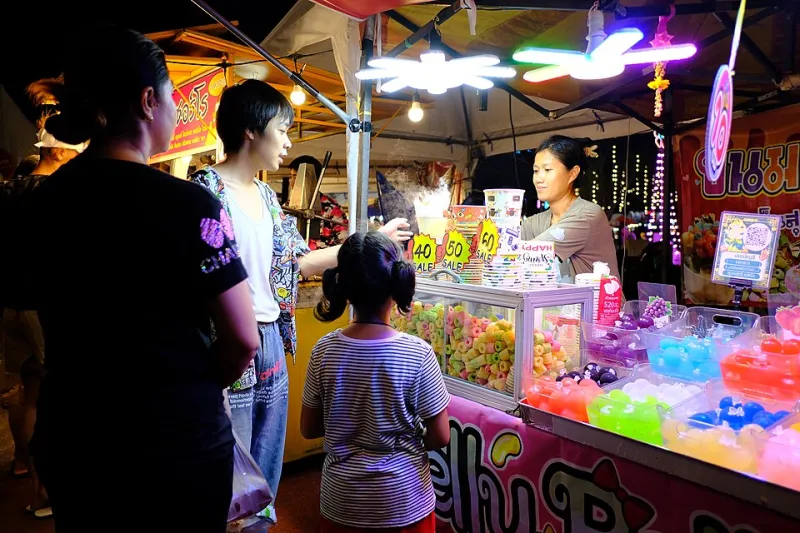
Photo: PattayaPatrol, CC BY-SA 4.0, via Wikimedia Commons
The Pantry Shift Nobody Saw Coming
Ask anyone who grew up in the US and they'll paint you the same candy aisle picture: rows of neon-colored gummies, chocolate bars wrapped in familiar foil, and those waxy little fruit chews that somehow always ended up at the bottom of a Halloween bucket. For decades, that was the landscape. Predictable, reliable, and honestly a little boring once you hit adulthood.
But something has been shifting. Quietly at first—a bag of Thai mango candy spotted at an Asian grocery store, a coworker passing around tamarind chews at the office—and then all at once, louder than anyone expected. Thai candy isn't just a novelty anymore. For a growing number of Americans, it's become the default. The thing they actually reach for.
So what's driving the switch? And is Thai candy genuinely different, or is this just another food trend dressed up in vibrant packaging? We went looking for answers.
Ingredients That Actually Mean Something
One of the first things you notice when you start reading Thai candy labels is how often you recognize what's on them. Real tamarind. Actual coconut milk. Dried fruit that came from a fruit. Compare that to the ingredient panels on many American mass-market candies—corn syrup derivatives, artificial flavor compounds numbered like government documents, colors with names that sound more like industrial chemicals than food.
Thai confectionery has a long tradition of building flavor from the source. Kanom (the Thai word for sweets and snacks) historically relied on what was abundant and fresh: coconut, palm sugar, pandan leaf, tropical fruits, and sesame. Even as Thai candy brands have scaled up for international markets, many have held onto that ingredient philosophy. The result is a product where the flavor has actual depth because it's coming from somewhere real.
"I gave my friend a Thai coconut candy and she literally stopped mid-conversation," says Priya M., a food blogger based in Austin. "She said it tasted like actual coconut, not like something that was in the same zip code as a coconut once. That was her turning point."
The Flavor Complexity Conversation
American candy largely operates on a single-note system. Sweet is sweet. Sour is sour. Occasionally both at once if you're feeling adventurous. Thai candy breaks that rulebook entirely and rebuilds it with more dimensions.
Take tamarind-based candies, arguably the most iconic entry point for curious American snackers. The flavor profile is simultaneously sweet, sour, and faintly salty—sometimes with a whisper of chili heat layered underneath. Your brain processes multiple signals at the same time and doesn't quite know how to categorize the experience. That's not confusion. That's complexity, and it's genuinely exciting for a palate that's been running on autopilot.
Pandan, another cornerstone of Thai sweets, delivers a flavor that's nutty, floral, and faintly vanilla-adjacent—but distinctly its own thing. Coconut candy made with real palm sugar carries a caramel-like richness that processed sugar simply can't replicate. Even the sour fruit candies common in Thailand bring a tartness that feels more alive than the citric acid punch of American sour belts.
"Once you've had a candy where you can actually taste the layers," says Marcus D., a self-described snack enthusiast from Chicago who discovered Thai candy through a subscription box, "going back to something flat just feels like a downgrade."
Texture: The Underrated Factor
Flavor gets most of the attention, but texture is where Thai candy quietly seals the deal. American candy tends to lean on familiar textures—chewy, crunchy, or melt-in-your-mouth—executed with varying degrees of success. Thai candy plays a wider field.
There's the slow, satisfying pull of a well-made coconut taffy. The brittle snap of sesame brittle that shatters cleanly and melts into something almost savory. Soft, yielding pandan jellies that have a bounce somewhere between a gummy and a fresh mochi. Dried fruit candies coated in a thin sugar shell that gives way to a chewy, intensely concentrated center.
These textures aren't accidental. Many are the result of production methods passed down through generations, refined over time rather than engineered in a lab for maximum speed and shelf stability. That care shows up in the eating experience.
The Premium Price Debate—And Why It's Worth Having
Let's be honest: Thai candy typically costs more than a bag of mainstream American gummies. A bag of imported tamarind chews or a box of artisan pandan caramels will run you more per ounce than what you'd grab from the checkout lane at a big-box store. For some shoppers, that's a dealbreaker. For others, it's become a non-issue once they understand what they're paying for.
The price reflects a few realities. Imported goods carry shipping and logistics costs. Smaller-batch production methods don't benefit from the same economies of scale as multinational candy conglomerates. And when you're sourcing real tamarind, actual palm sugar, and fresh pandan extract rather than synthetic stand-ins, ingredient costs go up.
But here's what converts reluctant buyers: portion behavior changes. People tend to eat Thai candy more intentionally. A few pieces feel satisfying in a way that doesn't lead to mindlessly finishing an entire bag. The flavor is complete enough that you don't keep reaching for more just trying to scratch an itch that never quite gets scratched.
"I used to go through a bag of American gummies in one sitting without even realizing it," admits Jordan T., a registered dietitian in Seattle who now keeps Thai candy in her desk. "With Thai candy, I have three or four pieces and I'm genuinely satisfied. So the cost-per-satisfying-experience actually evens out."
A Cultural Shift, Not Just a Snack Trend
What's happening with Thai candy in American pantries is part of something bigger. American food culture has spent the last decade actively seeking out complexity—craft coffee, natural wine, fermented everything, global cuisines that don't flatten their flavors for a nervous Western palate. Thai candy fits naturally into that current.
It also arrives at a moment when people are more curious about the stories behind their food. Where it came from. Who made it. What traditions it carries. Thai sweets have centuries of context behind them, rooted in temple offerings, family celebrations, and regional pride. Eating a piece of Thai candy can feel like a small window into something larger than the snack itself.
That's not something a mass-produced gummy bear has ever been able to offer.
So, Is the Switch Permanent?
For a lot of Americans who've made the jump to Thai candy, the answer seems to be yes. Not because they've sworn off every American sweet forever, but because their reference point has changed. Once you've tasted what real palm sugar does to a caramel, or felt the satisfying complexity of a proper tamarind chew, the old standbys start to feel like they're missing something.
The pantry shift is real, it's growing, and honestly? It makes a lot of sense. Thai candy isn't asking you to give anything up. It's just offering something better.